“Nigerians Are Suffering, APC Is Worried About Internal Fights!” — Shettima’s Admission Sparks Fresh Political Debate
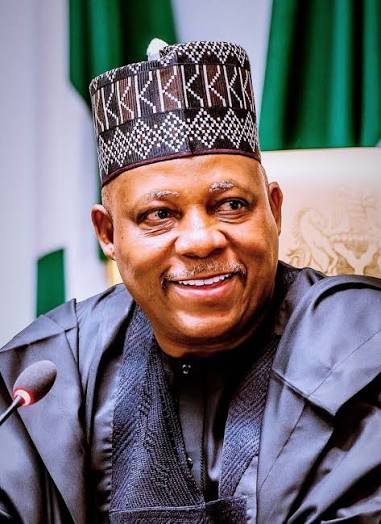
ABUJA, NIGERIA — Vice President Kashim Shettima has admitted that internal divisions within the ruling All Progressives Congress (APC) pose a greater threat to the party’s chances in the 2027 general elections than opposition figures Atiku Abubakar and Peter Obi.
Shettima made the disclosure on Saturday in Abuja during the unveiling of the campaign headquarters of Arewa for Asiwaju (A4A), a northern political coalition mobilising support for the re-election of President Bola Ahmed Tinubu and his deputy.
His remarks have drawn attention to the challenges facing the ruling party as it prepares for another electoral contest, particularly the possibility that internal disagreements, competing political interests and tensions among party leaders could undermine its re-election ambitions.
“Honestly, I am not afraid of the Peoples Democratic Party (PDP). I am not afraid of a diminished Peter Obi. But I am more afraid of internal contradictions within our household. If we unite as a people, as a family, we will conquer,” Shettima said.
The Vice President's statement suggests that, beyond confronting opposition candidates, the APC must address disagreements within its own ranks if it hopes to consolidate its political advantage ahead of the next general elections.
SHEttima WARNS APC LEADERS AGAINST INTERNAL SABOTAGE
The Vice President also cautioned northern political leaders against supporting Tinubu's presidential ambition while undermining APC governors and other party candidates seeking election at the state level.
According to him, the party's presidential campaign cannot succeed independently of its performance in governorship and legislative elections.
“There is no point in championing the cause of the presidential election and then undermining the governor in the gubernatorial election. Honestly, it will not go down well with the system,” he warned.
He urged party members to rally behind Tinubu, APC governors and members of the National Assembly to improve the party's electoral prospects.
“Let's rally round our governors. Let's rally round our members of the National Assembly. Let's rally round President Bola Ahmed Tinubu and see to the victory in the next round of elections,” he added.
His remarks highlight the importance of party cohesion in a political environment where disagreements over influence, candidate selection and the distribution of political power can complicate campaign efforts.
However, Shettima did not identify specific individuals responsible for the internal contradictions he described.
'DEFEAT ATIKU RESPECTFULLY'
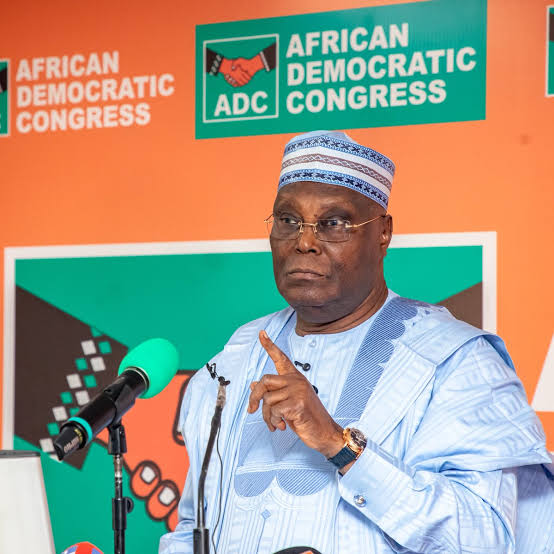
Addressing the party's preparations for the elections, Shettima challenged APC members to confront former Vice President Atiku Abubakar politically while maintaining respect for their opponents.
“Go and perform. Go and defeat Baba Atiku. Defeat him respectfully,” he said.
He also expressed confidence in the APC's organisational capacity, claiming that the party had sufficient personnel to mobilise voters across the country's polling units.
According to Shettima, Nigeria has 176,845 polling units, while the APC has 361,045 officials operating from the ward to the local government levels.
He argued that the figures demonstrated the party's capacity to deploy multiple officials to every polling unit.
Nevertheless, the number of party officials alone does not guarantee electoral victory. Voter turnout, public confidence, campaign credibility, the effectiveness of party mobilisation and the conduct of elections will also influence the outcome.
SHEttima ACKNOWLEDGES ECONOMIC HARDSHIP AS APC DEFENDS TINUBU
In a significant admission, the Vice President acknowledged that many Nigerian households continue to struggle to meet their basic needs despite the administration's economic policies.
“Every household struggling to make ends meet reminds us how much remains to be done,” he said.
He also cautioned party members against relying exclusively on praise and applause when assessing the administration's performance.
“We lose our hearing when applause becomes our only source of information,” Shettima stated.
The comments come amid continuing public concerns over living costs, food prices, household purchasing power and the wider economic consequences of government reforms.
While defending Tinubu's economic record, Shettima argued that the President inherited an economy facing severe challenges, including low foreign reserves and substantial government financing obligations.
He claimed that Nigeria's foreign reserves stood at $3.9 billion when Tinubu assumed office and that the government's Ways and Means obligations exceeded ₦27 trillion.
“Nigeria was on the road to Caracas. The economy was teetering on the brink of collapse. He literally saved the nation,” Shettima said.
He further claimed that Nigeria's foreign reserves had risen to approximately $58.9 billion.
The figures, particularly the comparison between the country's foreign reserves at the beginning of the administration and the current level, require examination against official Central Bank of Nigeria data and the relevant reporting dates.
More importantly, the administration's economic performance will likely remain a major issue in the next election, as voters assess whether improvements in macroeconomic indicators have translated into better living conditions.
For many Nigerians, the central question is whether government policies have reduced the cost of living, created jobs, improved electricity supply and strengthened household incomes.
APC CLAIMS NORTHERN SUPPORT, BUT POLITICAL UNITY REMAINS A QUESTION
Shettima expressed confidence in the APC's position across northern Nigeria, claiming that 18 of the region's 19 states were controlled by the ruling party.
He also said that 15 of the 18 members of the New Nigeria Peoples Party (NNPP) representing Kano State in the House of Representatives had defected to the APC.
According to him, the Kano State governor was also aligned with the ruling party.
The Vice President maintained that the North had made its political choice ahead of the forthcoming elections.
“By now, I believe the North has spoken. We have spoken with a resounding voice and unmistakable conviction. From Adamawa to Zamfara, from Borno to Niger, we have spoken,” he said.
However, the political alignment of governors and lawmakers does not automatically translate into unanimous support among voters.
The North is politically diverse, and the electoral strength of any party will depend on its ability to sustain grassroots support, respond to public concerns and persuade voters that its policies serve their interests.
Shettima also assured northern voters that they had nothing to fear from a second Tinubu administration, insisting that the President had the region's interests at heart.
APC NATIONAL CHAIRMAN MOBILISES FOR TINUBU'S SECOND TERM
The APC National Chairman, Professor Nentawe Yilwatda, also used the occasion to call for Tinubu's re-election.
Yilwatda moved a motion in support of the President's return to office and asked participants to affirm their backing.
“Today is a time for us to renew a mandate that was largely supported by the North, and the North again will largely support the return of President Bola Ahmed Tinubu for a second term,” he said.
He cited federal infrastructure projects in northern Nigeria, including the Abuja-Kaduna-Kano and Kano-Maiduguri roads, as evidence of the administration's commitment to the region.
Yilwatda argued that the two road projects covered more than 900 kilometres combined.
The projects are expected to feature prominently in the ruling party's campaign messaging as it seeks to demonstrate its record on infrastructure development.
However, voters will also be assessing the pace of project completion, the quality of infrastructure delivered and the extent to which public spending produces tangible benefits.
AREWA COALITION UNVEILS CAMPAIGN HEADQUARTERS
Muhammad Badaru Abubakar, former governor of Jigawa State and Director-General of the A4A campaign organisation, announced that the coalition's headquarters was located at No. 4 Port Harcourt Street, Area 11, Garki, Abuja.
He described the facility as the biggest campaign office in the country and said the organisation intended to conduct a disciplined and peaceful campaign.
“Let it be understood that this building is more than just a campaign office. It is a message. It says that Arewa is serious,” Badaru said.
He added that the coalition would take its message to markets, farms, university campuses, mosques and churches.
The initiative forms part of the broader effort to consolidate support for Tinubu and Shettima in northern Nigeria ahead of the next electoral contest.
THE BIG QUESTION: CAN APC RESOLVE ITS INTERNAL CONTRADICTIONS?
Shettima's admission raises an important question about the ruling party's preparedness for the next election: can the APC maintain unity among its leaders while convincing Nigerians that the administration deserves another term?
Although the Vice President expressed confidence in the party's political structure and northern support, his warning about internal contradictions suggests that the ruling party recognises the danger of divisions within its ranks.
The party must also contend with the challenge of persuading Nigerians who are dissatisfied with economic conditions that another four years under the same administration will produce better results.
For opposition figures such as Atiku Abubakar and Peter Obi, the APC's internal disagreements could create political opportunities if they are able to present a credible alternative and mobilise voters.
Ultimately, the 2027 contest will not be determined solely by the number of governors, lawmakers or campaign offices controlled by a political party.
It will also depend on public confidence, the credibility of competing candidates, the state of the economy and voters' assessment of the government's performance.
For now, Shettima has made his concern clear: the APC must guard against internal divisions if it hopes to retain power.
Whether the party can translate that warning into lasting unity—and whether its economic defence will persuade struggling Nigerians—remains a central question as preparations for the elections intensify.



0 Comment(s)